Market Leader in Private Credit
KBRA brings a unique lens to the evolving Private Credit landscape, delivering sharp insights through deep research, dynamic webinars, and rigorous rating analysis.
Private Credit: Much Ado About Nothing—Perspectives on Columbia Business School Paper About Private Ratings
The Columbia Business School’s Rating Without Market Discipline paper raises important questions regarding the growth of private ratings in U.S. life insurers’ portfolios and the interaction between ratings and regulatory capital. The paper concludes that privately rated bonds understate credit…
Expanding Use of Ratings in Private Credit
KBRA has over 1,000 ratings of transactions and issuers within the private capital universe and has worked with over 100 sponsors.
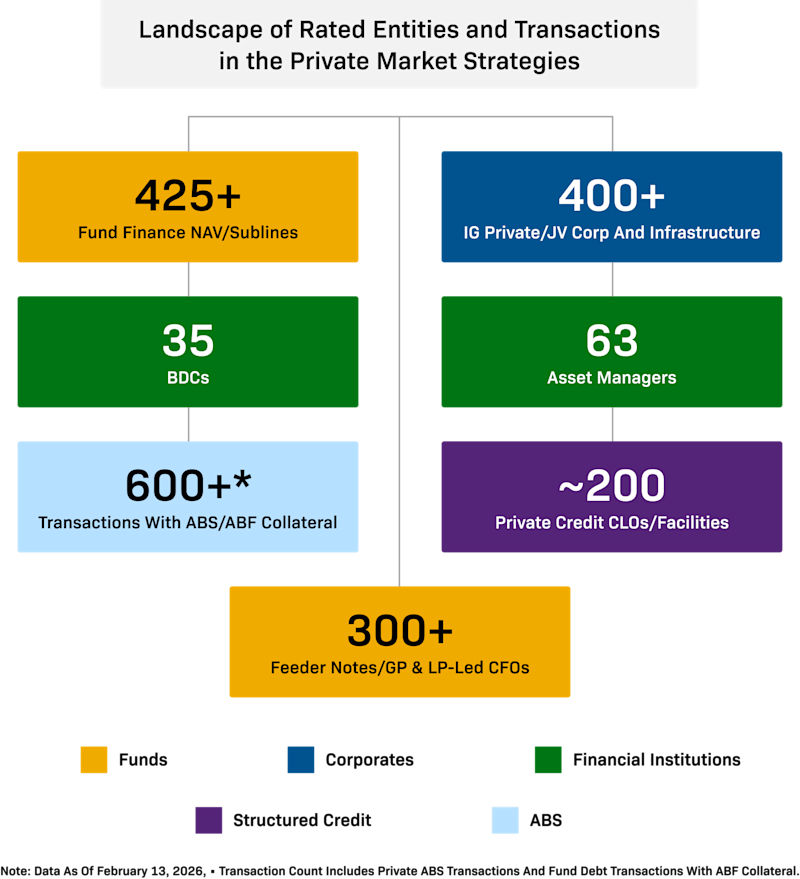
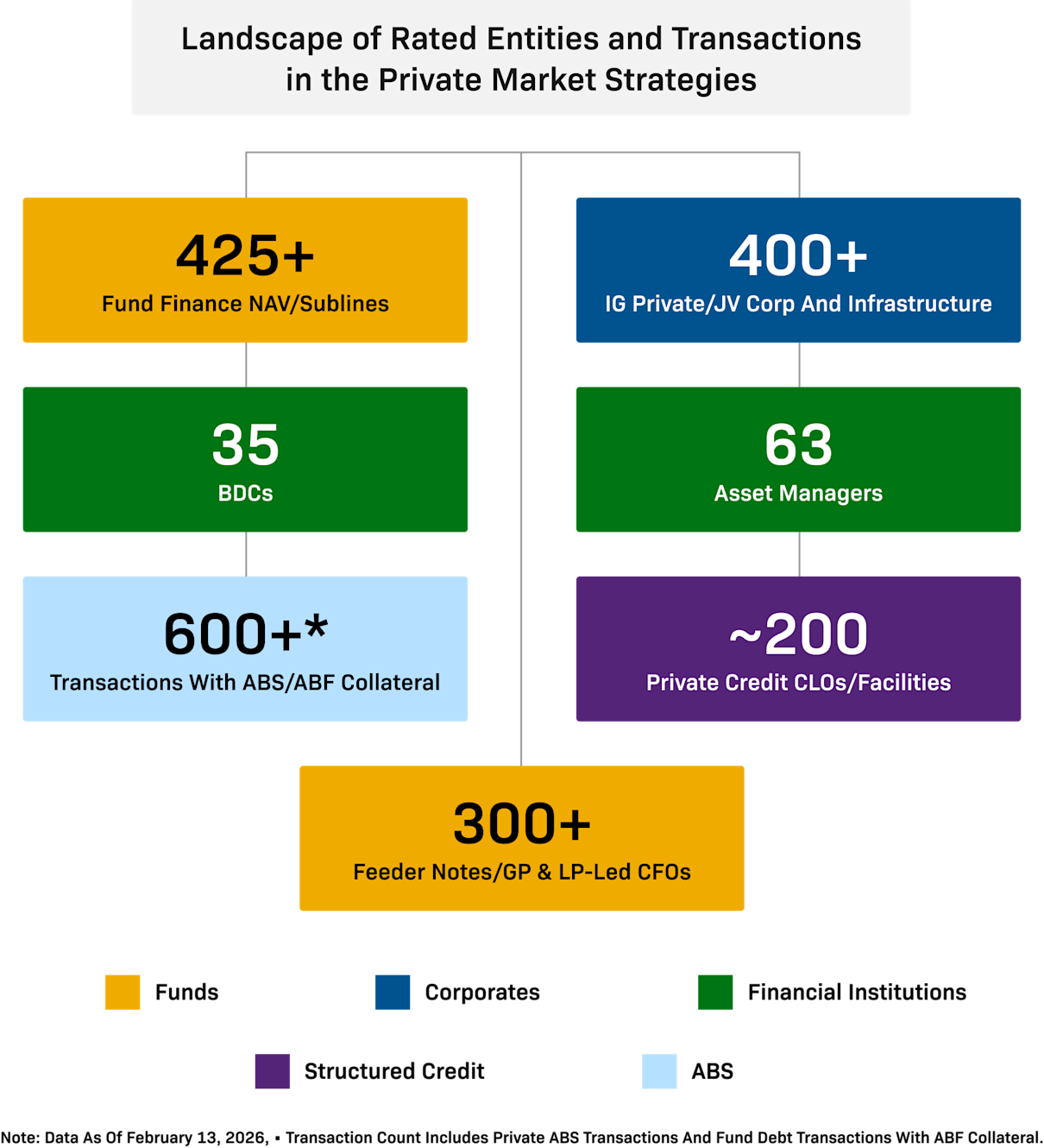
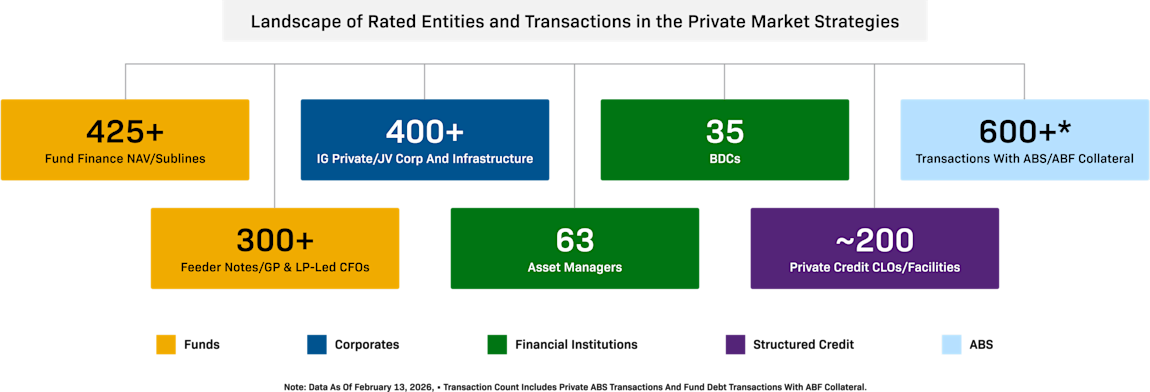
Performed 4,000+ underlying credit assessments on middle market sponsor-backed companies in LTM Q1 2026
Latest Private Credit Research
Private Credit: Much Ado About Nothing—Perspectives on Columbia Business School Paper About Private Ratings
The Columbia Business School’s Rating Without Market Discipline paper raises important questions regarding the growth of private ratings in U.S. life insurers’ portfolios and the interaction between ratings and regulatory capital. The paper concludes that privately rated bonds understate credit…
Private Credit: A More Balanced Review of the NAIC PLR Review Process for Insurance Balance Sheets
In August 2024, the National Association of Insurance Commissioners (NAIC) passed an amendment that granted the Securities Valuation Office (SVO) the ability to review and challenge credit ratings that it does not believe are a reasonable measure of risk for regulatory purposes (the Discretion…
Private Credit: Structured Credit Trend Watch—AI and Conflict Shape Market Outlook
Structured credit and collateralized loan obligation (CLO) market activity was relatively stable in early 2026. Issuance volume remained on pace with 2025, average broadly syndicated loan (BSL) AAA CLO spreads were largely range-bound between 115 basis points (bps) and 131 bps, and middle market…
Private Credit: Business Development Company (BDC) Ratings Compendium: First-Quarter 2026
In this quarter’s Compendium, KBRA examines the 1Q26 performance of its rated business development companies (BDC), along with an overview of nonqualifying assets and the role joint ventures (JV) play in increasing look-through leverage. Despite heightened market volatility, investor concerns…
Private Credit: Asset Managers 1Q26 Performance Recap—Credit Strength Through Volatility
This report summarizes key quarterly performance trends and thematic takeaways across publicly traded North American and European alternative asset managers, as well as the latest key performance metrics for KBRA’s rated universe of 67 asset managers.
Unpublished Ratings: Same Standards, Different Distribution
As the private markets continue to expand their use of investment grade fixed income instruments, regulators and other market participants have shown increasing interest in private ratings (also referred to as unpublished ratings). This increased focus has raised questions about how private ratings…
Webinars & Podcasts

Churchill Asset Management Private Capital Call Podcast: Behind the Headlines: Private Credit Defaults, Recoveries, and AI Risk in 2026
KBRA's Bill Cox, Chief Rating Officer, and Eric Rosenthal, Head of Default Research at KBRA DLD, joined Churchill's Private Capital Call podcast to discuss the current state of private credit.
Listen on: Apple Podcasts

KBRA's Perpetual Life BDC Review and 2026 Outlook Webinar
KBRA hosted a Perpetual-Life BDC Review and 2026 Outlook webinar on May 5. During the discussion, KBRA presented a review of BDC performance, including key insights on redemption activity and the evolving landscape of perpetual-life BDCs.

A Deep Dive on AI's Risk to Direct Lending
KBRA presents its framework for assessing potential AI disruption, highlighting the primary near-term risks facing companies with elevated exposure. KBRA views these risks as diffuse and manageable, likely to drive greater return differentiation.